
WORKING CAPITAL FINANCE
CAPITAL THAT KEEPS BUSINESS MOVING
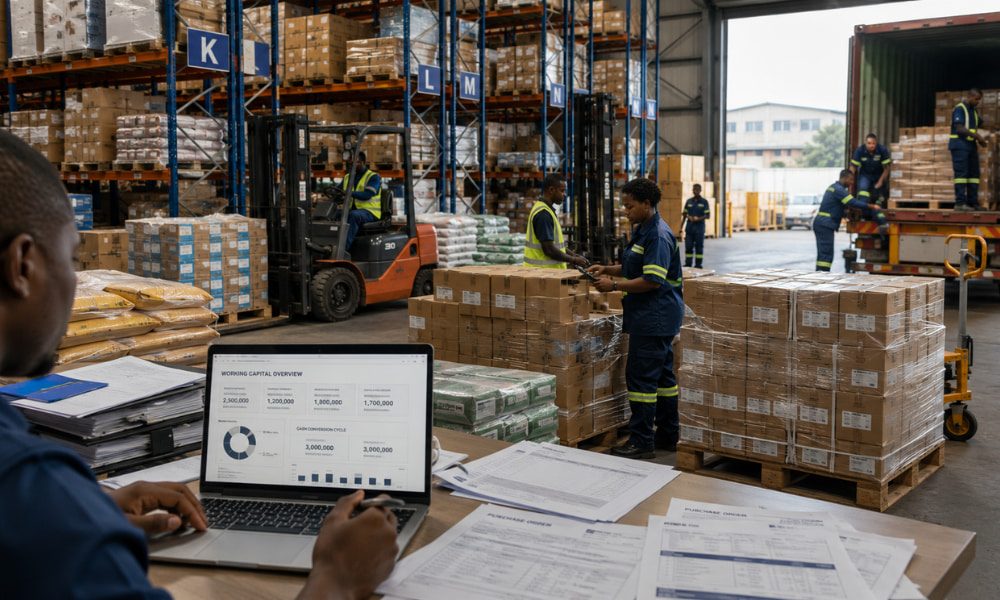
BRIDGING THE GAP BETWEEN EXPENDITURE AND REVENUE
Businesses frequently incur costs before receiving payment from their customers.
Capital may be required to purchase inventory or raw materials, pay suppliers, maintain production, deliver a confirmed contract, meet seasonal demand or manage the period between invoicing and collection.
Even a profitable business can experience liquidity pressure where operating expenditure arises before the corresponding revenue is received.
ATIB seeks to structure working-capital finance around the client’s commercial cycle, identifiable business requirement and expected source of repayment, helping viable businesses continue operating and pursue credible growth opportunities.
WORKING CAPITAL FINANCE CAPABILITIES
ATIB may consider financing connected to identifiable operating requirements where the underlying business activity, timing and repayment source can be assessed clearly.
INVENTORY & RAW-MATERIAL FINANCE
Finance connected to eligible raw materials, production inputs, finished stock or goods held for resale where purchasing, storage, sales and inventory-management arrangements support a credible commercial cycle.
SUPPLIER & OPERATING-COST FINANCE
Support for essential supplier payments, payroll, logistics, distribution, utilities and other expenditure directly connected to viable business operations and an identifiable repayment source.
RECEIVABLES & INVOICE-RELATED FINANCE
Financing considered against eligible completed deliveries, approved invoices or contractual payments from acceptable customers, subject to the quality, timing and enforceability of the receivable.
CONTRACT, ORDER & SEASONAL FINANCE
Finance connected to confirmed orders, supply or service contracts and predictable seasonal increases in activity where the business can demonstrate performance capacity, commercial viability and a clear payment route.

FINANCE MATCHED TO THE OPERATING CYCLE
Working-capital finance should strengthen a viable commercial cycle rather than conceal a recurring financial weakness.
-
A clearly defined commercial use for the financing
-
The operating and cash-conversion cycle understood
-
A facility amount proportionate to the requirement
-
Repayment aligned with identifiable business cash flow
-
Appropriate controls and security supporting the structure
-
Ongoing visibility over utilisation and performance
ATIB may consider the business’s financial performance, customers, suppliers, inventory, receivables, existing obligations, management capability and proposed use of funds. Where the requirement arises from continuing losses, structural weakness or long-term expenditure, another form of finance or financial advisory support may be more appropriate.
FINANCE ALIGNED WITH BUSINESS ACTIVITY
Working-capital finance can help a viable business accept new orders, maintain production, pay suppliers and manage the period before customer revenues are collected.
The financing should be proportionate to the operating requirement, connected to identifiable commercial activity and structured around a credible source and timetable for repayment.
Longer-term expenditure may require Term Loans or Asset Finance. Specific import, export or contractual transactions may connect with Letters of Credit, Credit Guarantees or Import & Export Finance, while specialised invoice funding may require Factoring & Receivables Finance.